
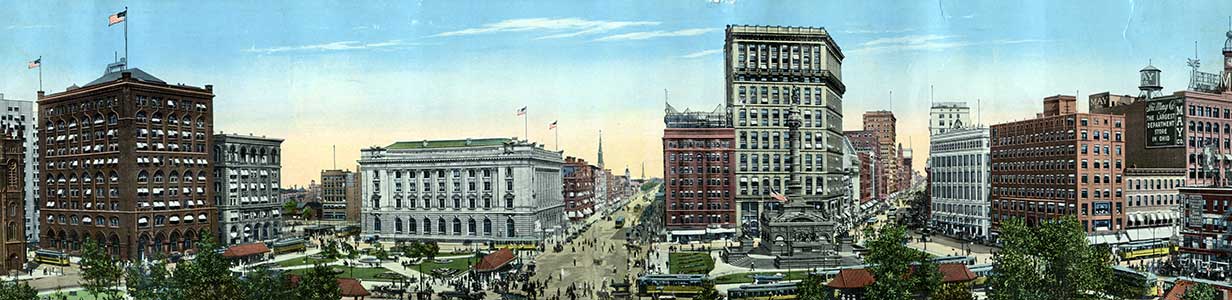
Settlement Houses in Cleveland: Changing Communities From Within
BROWSE ALL IMAGES IN THIS COLLECTION
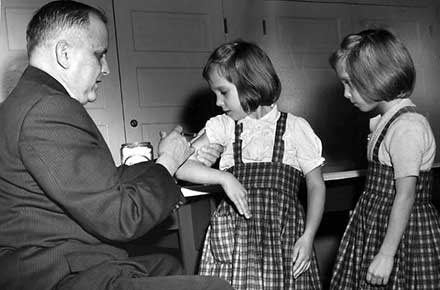
Dr. William Macy gives twin girls injections at the East End Neighborhood House, 1960.
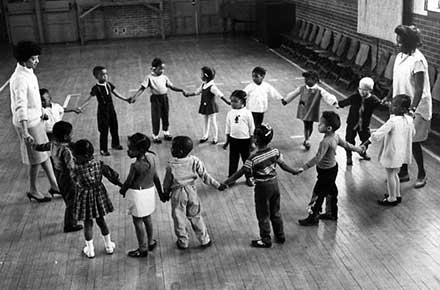
Children play games at Friendly Inn Settlement House, 1967.
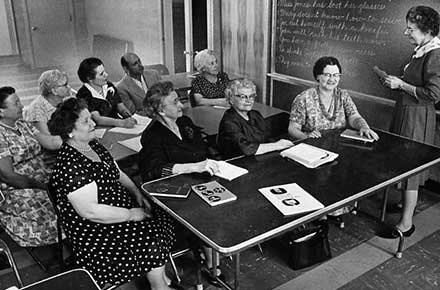
English Class at University Settlement, 1964.
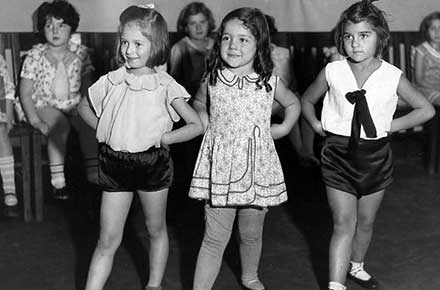
Ballet class at Council Educational Alliance, 1931.
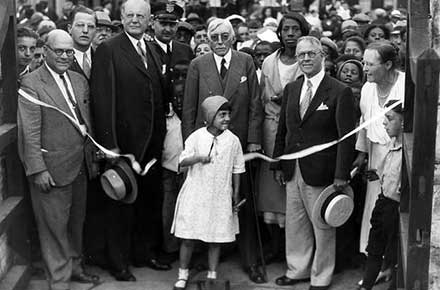
Ribbon Cutting at Hiram House, 1932.
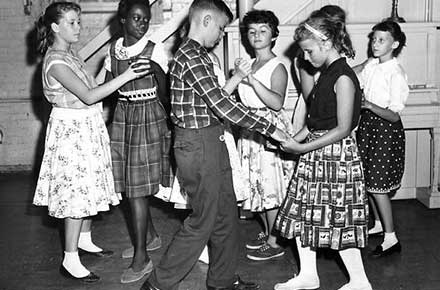
Dancing lessons at Goodrich Settlement House, 1959.
The settlement house movement began in England in the late 1800's. These houses strived to educate the community, while trying to solve urban problems. Many settlement houses offered education classes, health care, and even served as a meeting place for the community.
The first settlement house to open in Cleveland was Hiram House. It was followed shortly afterwards by Alta House, Goodrich House (now called the Goodrich-Gannett Neighborhood Center), Merrick House, and the Friendly Inn Social Settlement. Each of these houses served a particular community in Cleveland. The Alta House served the Italians in Little Italy, while the East End House initially served the local Hungarian population at that time.
Settlement houses helped Clevelanders by not only bringing communities together, but by changing the community from within. Serving as a centerpiece for its neighborhood, the settlement house provided a local meeting spot for various groups and organizations. Some settlement houses, like Karamu House, founded in 1915 and dedicated to interracial theater and the arts, have achieved national renown. Settlement houses also offered vocational classes for the local workers, daycare for children, and worked with labor unions for better working standards in an effort to improve the lives of everyone in their respective communities.
About the Photos
The images reproduced here are only a small portion of the Cleveland Press Archives in Special Collections at the Michael Schwartz Library, Cleveland State University.
For Further Study:
- Alta House - from the Encyclopedia of Cleveland History
- Alta House web site
- East End Neighborhood House - from the Encyclopedia of Cleveland History
- East End Neighborhood House web site
- Friendly Inn- from the Encyclopedia of Cleveland History
- Friendly Inn Settlement (in facebook)
- Goodrich-Gannett Neighborhood Center - from the Encyclopedia of Cleveland History
- Google Map of settlement houses in Cleveland
- Hiram House - from the Encyclopedia of Cleveland History
- History of Hiram House
- Karamu House - from the Encyclopedia of Cleveland History
- Karamu House - official website
- Karamu House and Theatre - a Cleveland Memory web exhibit
- Merrick House Social Settlement - from the Encyclopedia of Cleveland History
- Merrick House History
- Merrick House web site
- Settlement Houses - from the Encyclopedia of Cleveland History
- Settlement Movement - from Wikipedia
Credits and Appreciation:
This web site is the practicum project of Library and Information Science student, Ryan DePretis.


